
Key Takeaways from the 2026 Rhode Island Compost Conference
Heather Kerns, Contributor
Recently, WasteNaut attended the 2026 Rhode Island Compost Conference and Tradeshow. Founder Eva Touhey presented a program update on the composting work she is doing with the North Kingstown School Department, while I attended the event eager to learn more about the wide world of composting.
The conference brought together national leaders in the composting movement alongside many of Rhode Island’s own innovators working to reduce waste and build stronger local systems. As someone still expanding my composting knowledge, it was inspiring to see just how many people and organizations are working toward a less wasteful Rhode Island.
Here are a few of our biggest takeaways from the event.
Prevention Comes First
Keynote speaker Brenda Platt of the Institute for Local Self Reliance kicked off the conference with an overview of several engaging and relevant composting topics. One concept that really stuck with me was her diagram illustrating the “Hierarchy to Reduce Waste and Build Community.”
At the very top of the hierarchy is prevention. The best way to deal with waste is simply not to create it in the first place! From there, the hierarchy moves toward strategies like donating edible food, composting at home, and developing locally prioritized composting systems.
This framework is a great reminder that composting is just one piece of the bigger waste reduction picture. For organizations trying to reduce their environmental impact, the most effective strategies start with looking upstream. For us at WasteNaut, that systems thinking is key. Composting programs work best when they’re part of a broader strategy that helps organizations prevent waste where possible and responsibly manage what remains.
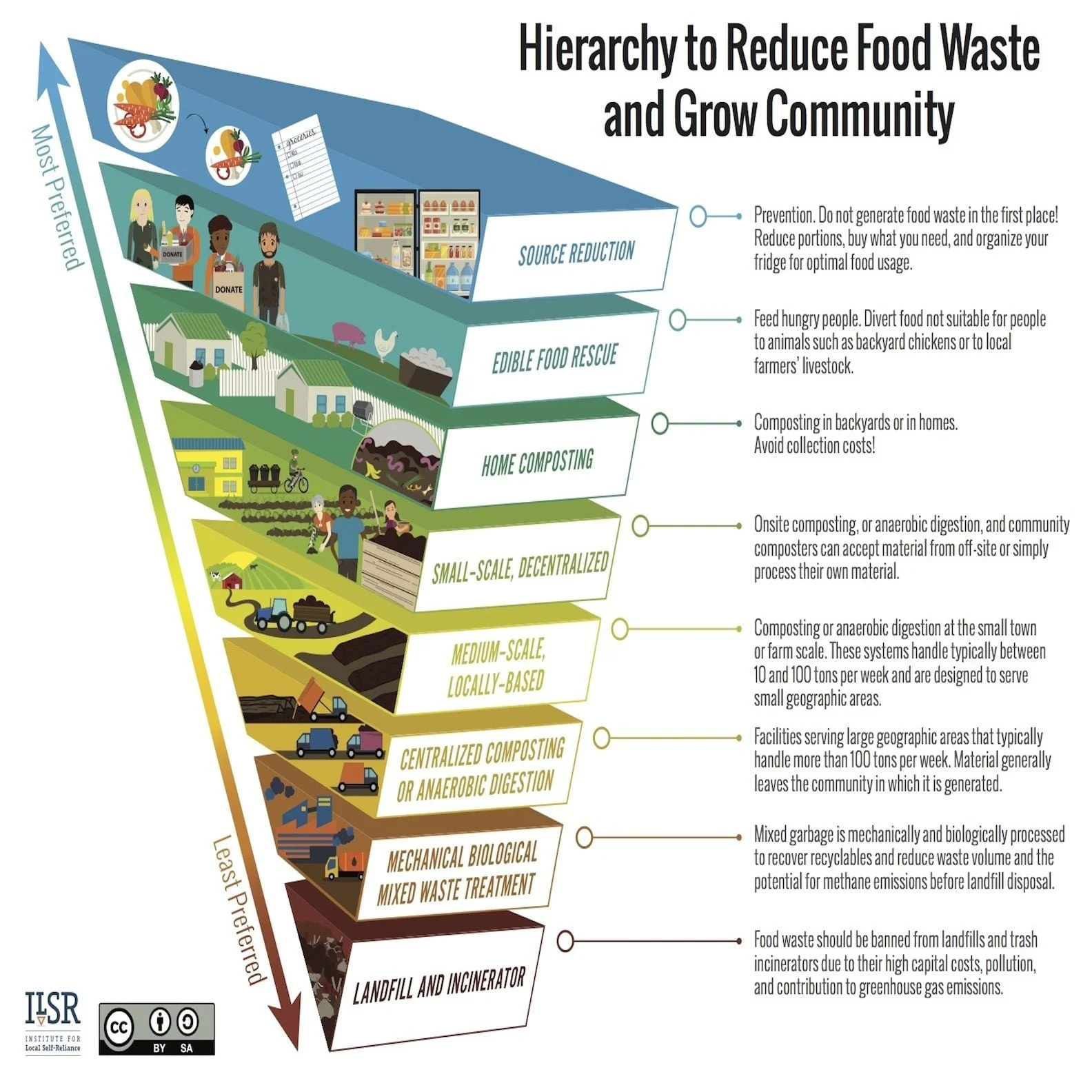
Image from the ILSR (Institute for Local Self Reliance)
Composting Can Save Businesses Money
Another important takeaway from the conference was hearing directly from business owners who have successfully reduced their costs by implementing composting programs. By segregating organic waste, organizations were able to lower disposal fees and streamline their waste hauling services. In other words, composting isn’t just environmentally responsible—it can also make good financial sense.
At WasteNaut, we love seeing sustainability strategies that work on multiple levels. When waste reduction programs are designed thoughtfully, they can help organizations reduce costs, meet sustainability goals, and minimize environmental impact at the same time.
Keep Nutrients in the Community
Another idea I loved was a simple metaphor: think of a tree.
Leaves fall from the tree, decompose, and return nutrients to the soil. Those nutrients help the tree grow stronger, and the cycle continues naturally. If we collect those leaves and send them far away, to a landfill or distant processing facility, we remove those nutrients from the ecosystem that produced them.
Composting locally keeps those nutrients cycling within the community. Food scraps become compost, compost supports local soil health, and healthier soil supports stronger food systems.
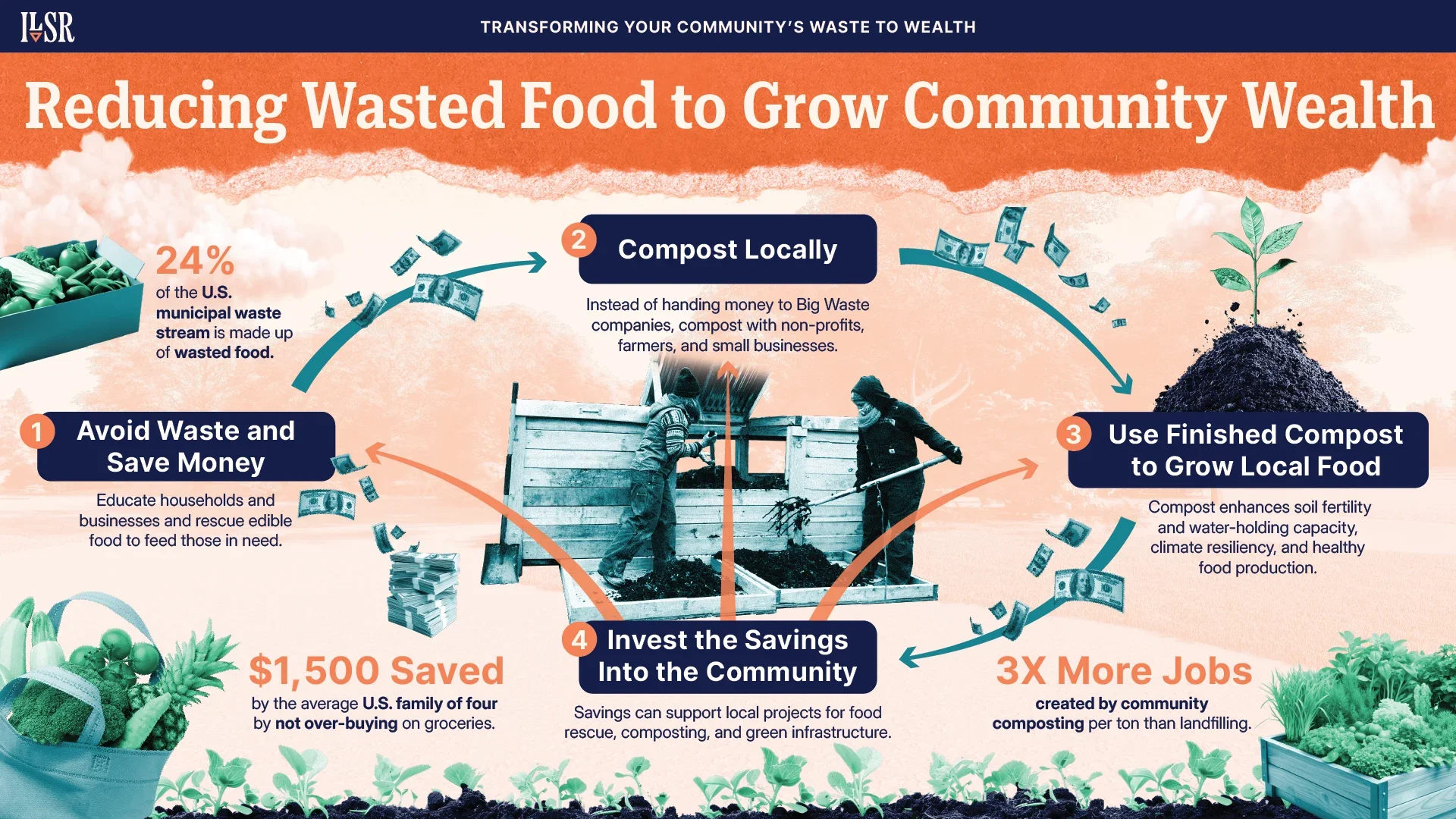
Image from the ILSR (Institute for Local Self Reliance)
Looking Ahead
And if this conference was any indication, Rhode Island has an incredible network of people working to make those systems stronger. We’re excited to keep learning, keep collaborating, and keep helping organizations find practical ways to reduce waste.
Stay tuned for our next blog post, where we’ll kick off a series covering composting basics!