
COMPOSTING BASICS - COMPOSTING CERTIFICATIONS
Heather Kerns, Contributor
Because the term compostable can be misused or misunderstood, several organizations have developed certification systems to verify whether products truly meet compostability standards. These certifications help businesses and consumers identify materials that are designed to break down safely and effectively in composting environments.
Biodegradable Products Institute (BPI)
The Biodegradable Products Institute provides a compostability certification based on a product’s ability and timeline to break down under commercial composting conditions. To check whether a product is certified, look for the BPI stamp. This stamp demonstrates that there is compatible potential for the product’s end of life — meaning it can be diverted with food scraps and other compostable material to a commercial composting facility.
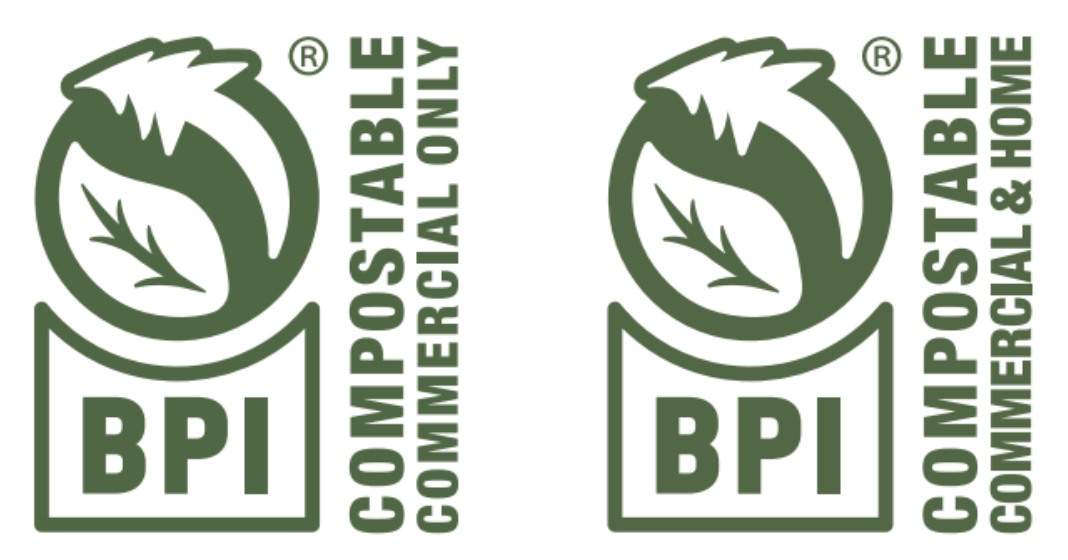
Examples of the BPI stamps to look for on products.
Composting Manufacturing Alliance (CMA)
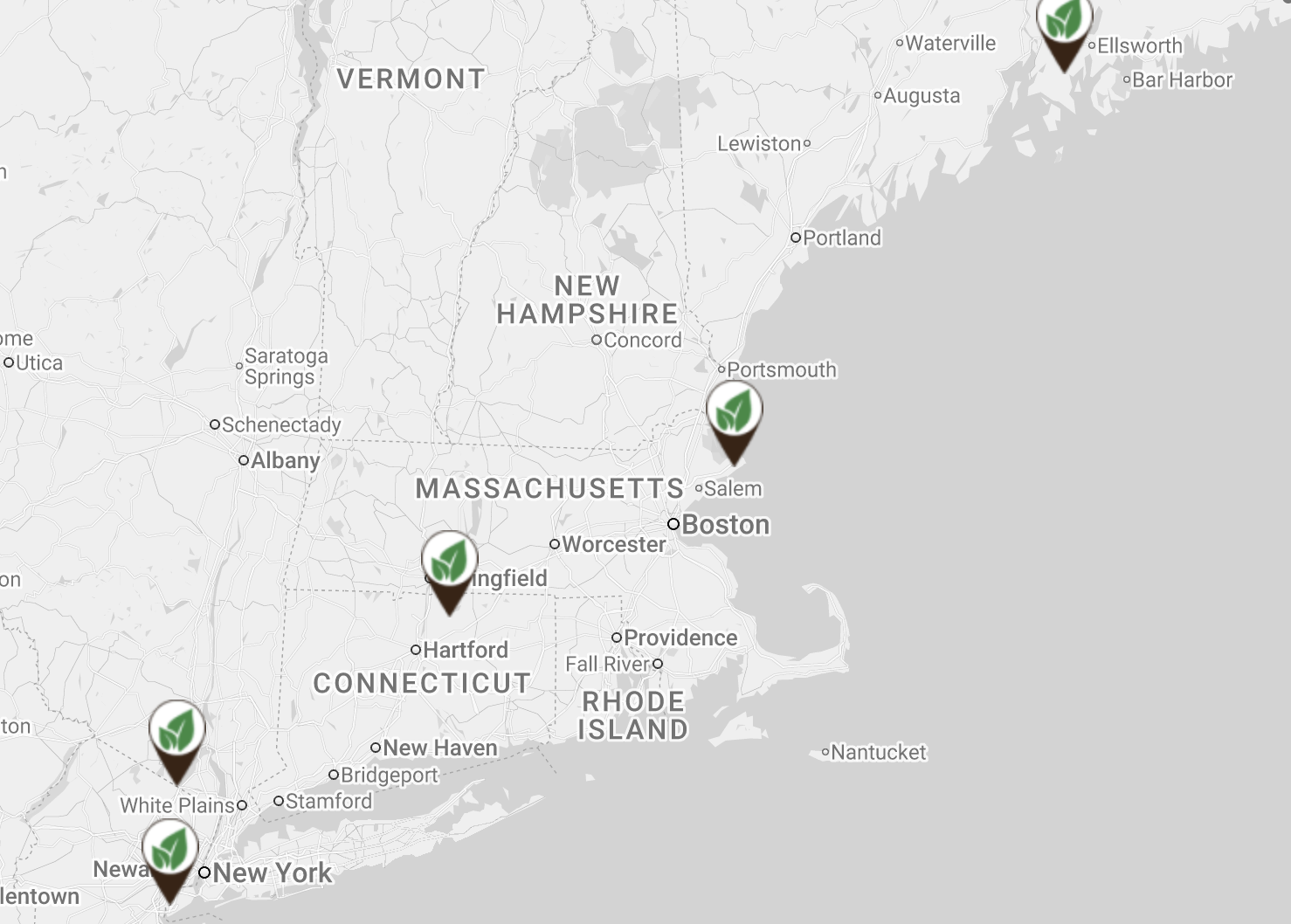
This is a map showing the location of composting facilities working with and accepting CMA products in New England.
The Compost Manufacturing Alliance certification focuses on how compostable products perform in real-world composting environments. Unlike some certifications that test only in a laboratory setting, CMA evaluates whether products actually break down during standard processing conditions in an actual compost pile. This helps bridge the gap between certification and practical acceptance.
TÜV Austria
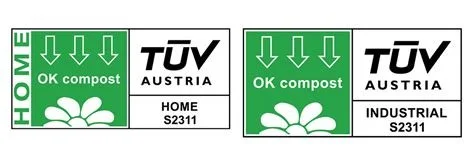
TÜV Austria also certifies compostable materials through its internationally recognized OK compost certification system. These certifications verify that products meet strict standards for biodegradation, disintegration, and environmental safety in composting environments. The program splits certification into two composting conditions: Home and Industrial.
OK Compost INDUSTRIAL
The OK Compost Industrial certification indicates that a product can break down in a commercial or industrial composting facility. These facilities maintain high temperatures and controlled conditions that allow certified materials to decompose efficiently. This label is commonly found on compostable packaging and serviceware designed for commercial composting programs.
OK Compost HOME
The OK Compost Home certification verifies that a product can biodegrade in lower-temperature backyard compost systems. Home composting conditions are less controlled and typically cooler than industrial facilities. Because of this, products must break down effectively under more natural conditions.
European Norm 13432
European Norm (EN) 13432 is the primary European standard used to determine whether packaging materials can be classified as compostable in industrial composting systems. While it is primarily used within the European Union, it has influenced compostability standards and certification programs used around the world. The standard requires materials to biodegrade, physically disintegrate during the composting process, and ensure the resulting compost remains safe for environmental use.
What Does This Mean in Practice?
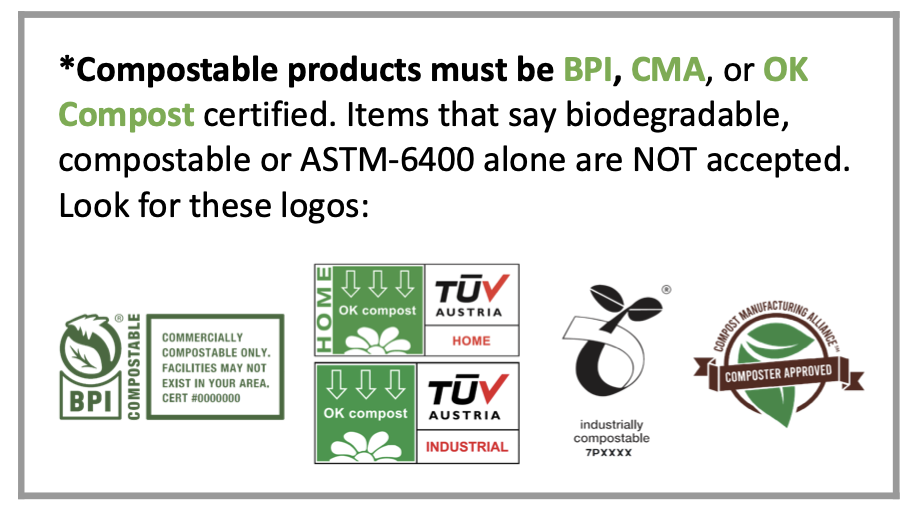
Guidance provided by one of our trusted composting facilities, Black Earth Compost.
With all these standards, labels, and conditions, composting can start to feel less straightforward than it first appears. For the average business owner, event planner, or environmentally conscious consumer, recognizing certified compostable materials is a strong place to start.
However, choosing the right materials is only part of the equation. Compostable products only work when they are paired with the appropriate waste systems and composting infrastructure. We will explore this topic further in our next blog post, Composting Basics – Home vs. Commercial Composting.
At WasteNaut, we help organizations make informed decisions that align with their sustainability goals while navigating the complexities behind material choices and end-of-life systems. Have questions? Reach out, we’re happy to help.
REFERENCES:
Biodegradable vs. Compostable. BPIWorld. Accessed February 26, 2026. From https://bpiworld.org/biodegradable-vs-compostable
Compostability Certification. BPIWorld. Accessed February 26, 2026. From https://bpiworld.org/compostability-certification
Compost Manufacturing Alliance. Accessed March 20, 2026. From https://compostmanufacturingalliance.com
TÜV OK Compost Home. TÜV Austria. Accessed March 9, 2026. From https://en.tuv.at/ok-compost-home-en/
TÜV OK Compost Industrial. TÜV Austria. Accessed March 9, 2026. From https://en.tuv.at/ok-compost-industrial-en/
EN 13432 – Requirements for Packaging Recoverable Through Composting and Biodegradation. European Bioplastics. Accessed March 9, 2026. From https://docs.european-bioplastics.org/publications/bp/EUBP_BP_En_13432.pdf