
5 of our Favorite Benefits of Composting
Heather Kerns, Contributor
With Compost Awareness Week 2026 (5/3-5/9) right around the corner, we’re highlighting some of our favorite benefits of composting!
Composting offers a range of environmental benefits at both the household and commercial scale. By transforming organic waste into nutrient-rich material, composting supports more sustainable waste management systems while contributing to healthier ecosystems. The following sections highlight a selection of key composting benefits:
Waste Reduction
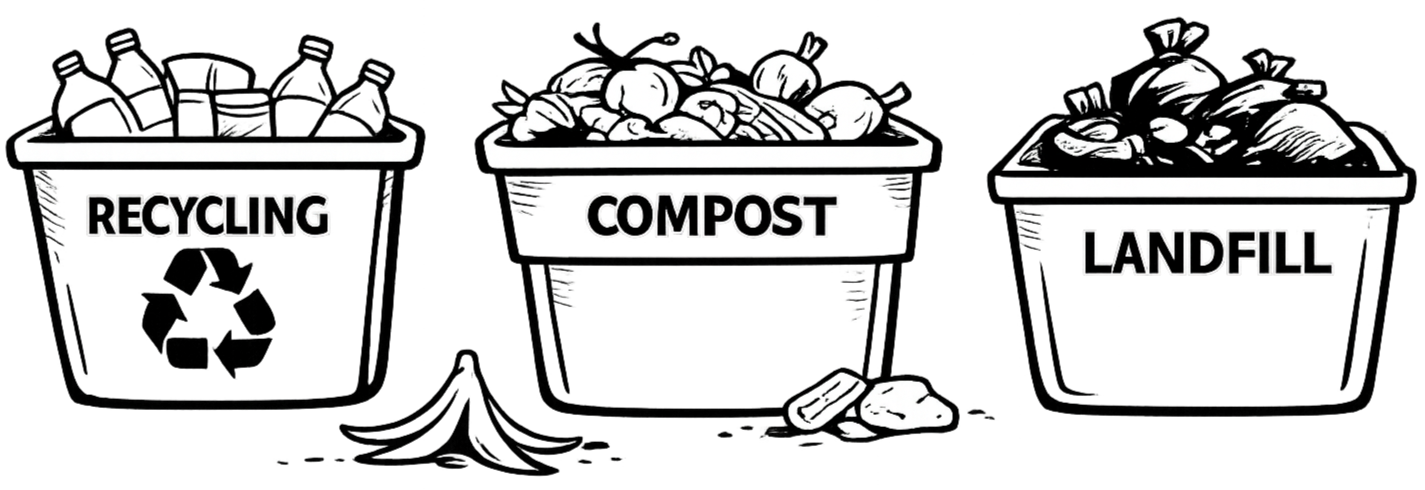
Across New England, waste management systems face growing pressure as landfill space becomes more limited and disposal costs increase. Massachusetts generates and disposes of vast amounts of waste each year which places increasing pressure on the state’s waste management system. Much of this waste is processed at waste-to-energy facilities or transported out of state due to limited landfill capacity in Massachusetts and across the New England region.
Diverting organic waste through composting is one strategy that can help reduce the volume of material sent to incinerators and landfills. By turning food scraps and other compostable materials into a nutrient-rich soil supplement, composting helps keep resources in use while reducing pressure on already constrained disposal systems.
Soil Health
Soil is a living ecosystem made up of minerals, organic matter, and millions of microorganisms that work together to support plant growth and nutrient cycling. Healthy soil plays a critical role in food production, water retention, and ecosystem stability, making it an essential foundation for both agriculture and natural environments.
One of the major environmental benefits of composting is its ability to improve soil health. When compost is added to soil, it contributes to the biological, chemical, and structural health of soil ecosystems.
Carbon Sequestration
Applying compost to agricultural soils may also play an important role in climate-friendly farming. A study found that soils treated with compost stored significantly more carbon, including carbon located deeper in the soil where it can remain stable for longer periods.
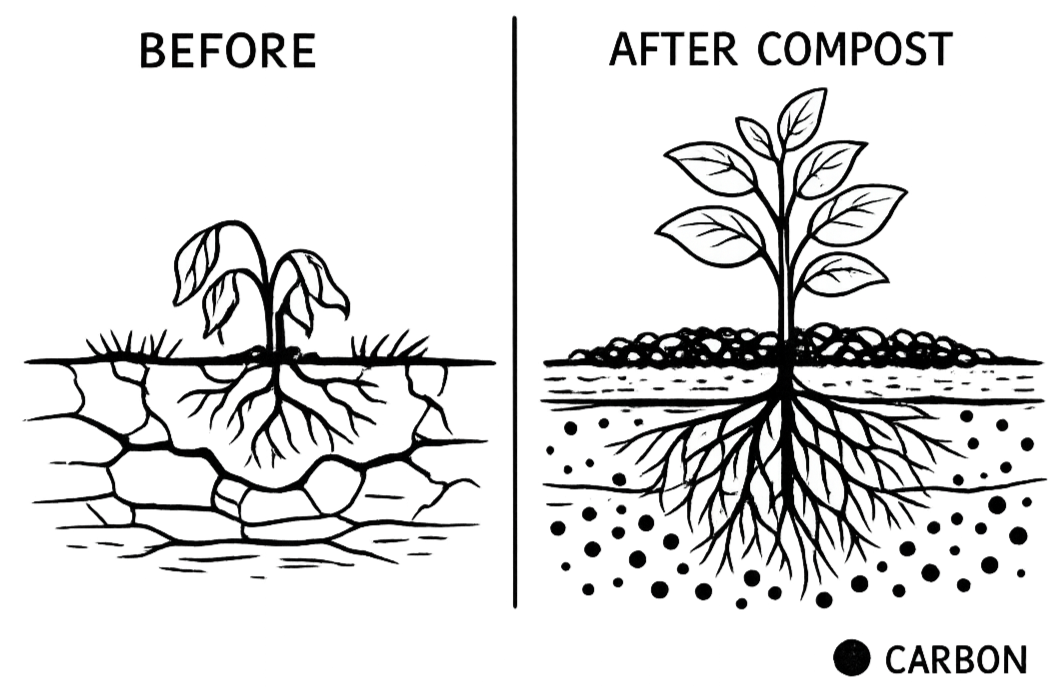
These findings suggest that compost application may be an underrecognized tool for improving soil health while helping agriculture store carbon and reduce its climate impact.
Greenhouse Gas Reduction
Project Drawdown is an organization that evaluates and ranks climate solutions based on their potential to reduce greenhouse gas emissions. In its climate solutions framework, Project Drawdown identifies expanded composting as a highly recommended strategy for reducing emissions from organic waste.
When food and yard waste decompose in landfills, they break down in low-oxygen conditions and generate methane, a powerful greenhouse gas. Composting allows these organic materials to decompose in oxygen-rich environments, producing far fewer greenhouse gas emissions while returning valuable nutrients to the soil.
Contaminated Site Remediation
Compost can also play an important role in remediating contaminated soils. The organic matter in compost can bind with pollutants such as heavy metals, reducing their mobility and limiting how easily they move through soil or are absorbed by plants. Compost also supports diverse microbial communities that can break down toxic organic contaminants such as petroleum products and pesticides through a process known as bioremediation. Because of these properties, compost is increasingly used as a tool to help stabilize pollutants and support the restoration of contaminated landscapes.

Together, these benefits illustrate how composting extends far beyond simple waste diversion. By returning organic materials to the soil, composting helps close nutrient loops, reduce environmental impacts, and support healthier ecosystems. These examples represent just a few of the many ways composting can contribute to more sustainable waste management systems.
If you’re interested in exploring how composting could support the sustainability goals of your event or organization, reach out to WasteNaut!
REFERENCES:
2023 Solid Waste Data Update. Massachusetts Department of Environmental Protection (MassDEP). Accessed March 9, 2026. From https://www.mass.gov/doc/2023-solid-waste-data-update/download
Benefits of Using Compost. U.S. Environmental Protection Agency. Accessed March 9, 2026. From https://www.epa.gov/sustainable-management-food/benefits-using-compost
Cernansky, R. 2019. 19-Year Study Shows We’ve Been Undervaluing How Much Compost Can Boost Carbon Capture. Science Alert. Accessed March 7, 2026. From https://www.sciencealert.com/is-compost-the-secret-to-making-agriculture-climate-friendly
Increase Centralized Composting. Project Drawdown. Accessed March 5, 2026. From https://drawdown.org/explorer/increase-centralized-composting
Nargi, L. 2020. What is soil and why is it important?. Food Print. Accessed March 9, 2026. From https://foodprint.org/blog/why-is-soil-important/
Quinn, M. 2022. Massachusetts Faces Landfill Capacity Constraints. Waste Dive. Accessed March 7, 2026. From https://www.wastedive.com/news/massachusetts-landfill-capacity-constraints-massrecycle-recycling-solutions/621493/
Improves Soil Health. United States Composting Council. Accessed March 9, 2026. From https://www.compostingcouncil.org/page/SoilHealthBenefits