
Earth Day Isn’t About Perfection, It’s About Participation: 3 Easy Ways to Reduce Your Food Waste
Heather Kerns, Contributor

In a time when environmental topics feel increasingly politicized, it can be hard to focus on solutions in the middle of it all. That’s why this year, we’re grounding our Earth Day celebrations in one simple idea: Earth Day isn’t about perfection—it’s about participation. Cheers to the small, everyday choices that add up to an environmentally conscious life and a more sustainable future.
One of the easiest ways to start participating is by taking a closer look at the waste we create every day.
For today’s post, I wanted to highlight three easy ways you can reduce food waste at home. No matter your household size, work schedule, or cooking skills, these are practical, realistic changes that can make a difference.
Why does reducing food waste matter?
For starters—it adds up quickly. The average family of four spends about $3,000 a year on food they don’t eat. That’s roughly $57 a week literally going to waste.
But beyond the cost savings, reducing food waste also means using fewer resources overall—from the water and energy used to grow and transport food, to the emissions created when wasted food ends up in landfills.
In short, wasting less food is one of the simplest ways to lower your environmental footprint, no perfection required.
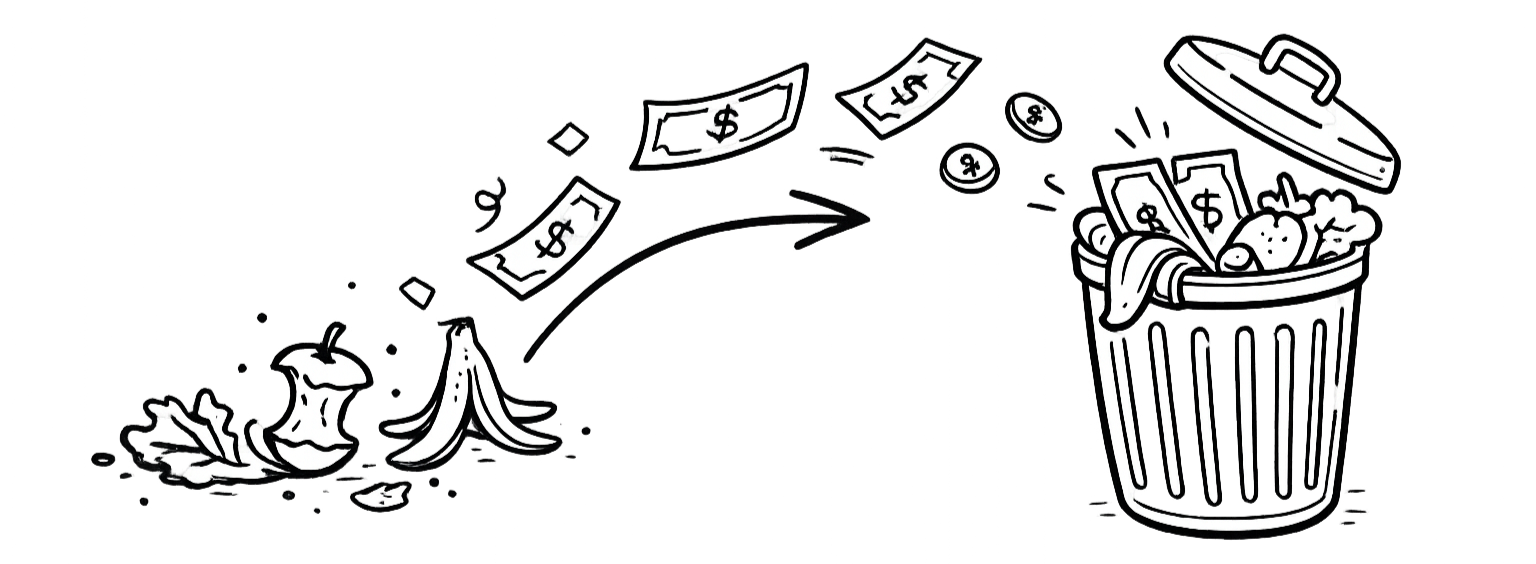
Looking for somewhere to start? Here are three of our favorites:
Shop Your Kitchen First
Before heading to the store, take a quick look in your refrigerator, freezer, and pantry to see what you already have. Taking inventory before you shop can help you avoid rebuying things you don’t need, and makes it easier to plan meals around what’s already in your kitchen. It’s a simple habit that can save money and cut down on waste without adding too much extra work to your routine.
Freeze What You Can
Freezing food is one of the easiest ways to stop waste before it happens. If something is getting close to going bad—bread, fruit, leftovers—don’t wait. Pop it in the freezer. You’ll give it a second life and buy yourself more time to actually use it. To make it work long-term, store food in airtight containers, portion it out so it’s easy to grab later, and add a quick label or date so nothing gets lost in the back. Freezing means fewer last-minute grocery runs, less prep during the week, and more of the food you buy actually gets eaten.
Give Your Food a Second Life
Produce that’s a little past its prime—and those random odds and ends in your fridge—often still have plenty of life left in them. Instead of tossing them, try repurposing what you have. Slightly wilted veggies, leftover grains, or that last bit of sauce can easily come together in soups, stir-fries, frittatas, sauces, or even smoothies and baked goods. These “clean out the fridge” meals don’t have to be perfect! You’ll waste less, save money, and might even stumble upon a new favorite dish along the way.

Final Thoughts
Taking these steps is a great way to start living a less wasteful life. And remember, when you do create waste, the next best thing you can do is divert it from the landfill. If you’re looking for ways to go a step further, we’ve covered composting, one of the most effective ways to divert food waste, in past blog posts.
Most importantly, don’t forget to celebrate the small wins this Earth Day. Every effort counts. If your organization or event is looking to reduce food waste, operate more sustainably, or learn more about sustainable practices, feel free to reach out—we’re here to help.
References
U.S. Environmental Protection Agency (EPA). Estimating the cost of food waste to American consumers. Retrieved April 14, 2026, from https://www.epa.gov/land-research/estimating-cost-food-waste-american-consumers
U.S. Environmental Protection Agency (EPA). Preventing wasted food at home. Retrieved April 14, 2026, from https://www.epa.gov/recycle/preventing-wasted-food-home
World Wildlife Fund (WWF). Small steps to reduce food waste. Retrieved April 14, 2026, from https://www.worldwildlife.org/news/stories/small-steps-to-reduce-food-waste/