
COMPOSTING BASICS - HOME vs. COMMERCIAL COMPOSTING
Heather Kerns, Contributor
Understanding the difference between home and commercial composting is key to making informed, sustainable choices about waste. From temperature and timing to the types of materials accepted, each system plays a unique role in reducing what we send to landfills. Here’s a breakdown of how they work and what belongs where.
HOME COMPOSTABLE
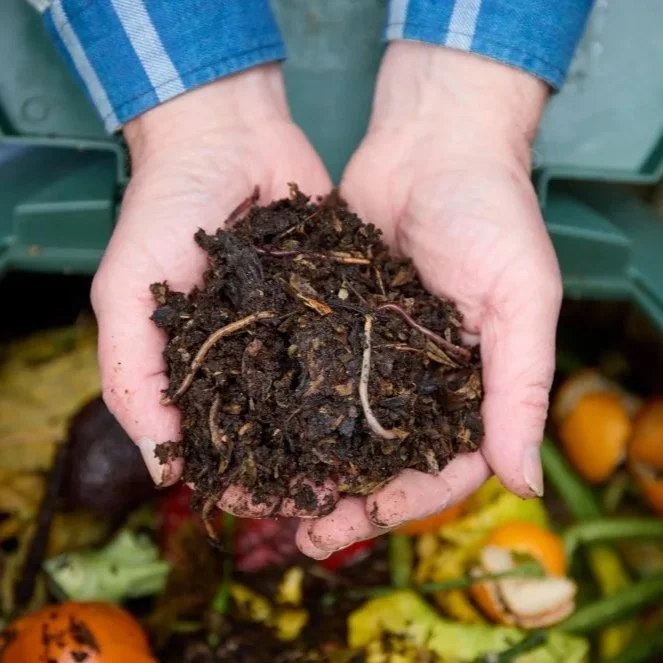
Home compostable items are those that can break down naturally without industrial intervention. A backyard compost pile or tumbler typically operates at lower temperatures and experiences more variable conditions than a commercial composting facility. Because of these conditions, materials usually take longer to break down. Typically that is six to twelve months in a home compost system.
COMMERCIALLY COMPOSTABLE
Commercially compostable products require specific conditions that are created in industrial composting facilities. Compost piles in these facilities reach much higher temperatures (often 130–160°F!) and are closely managed to maintain optimal conditions. Because of this controlled environment, materials may break down much faster, often within a few weeks to a few months.
UNDERSTANDING FEEDSTOCK
The term feedstock refers to the materials that are added to a compost pile. When composting, it’s important to consider what materials are appropriate for a home compost system versus what should be sent to a commercial facility. Some commercial composting operations only accept yard trimmings, while others accept a wider range of organic materials.
WHAT CAN BE COMPOSTED?
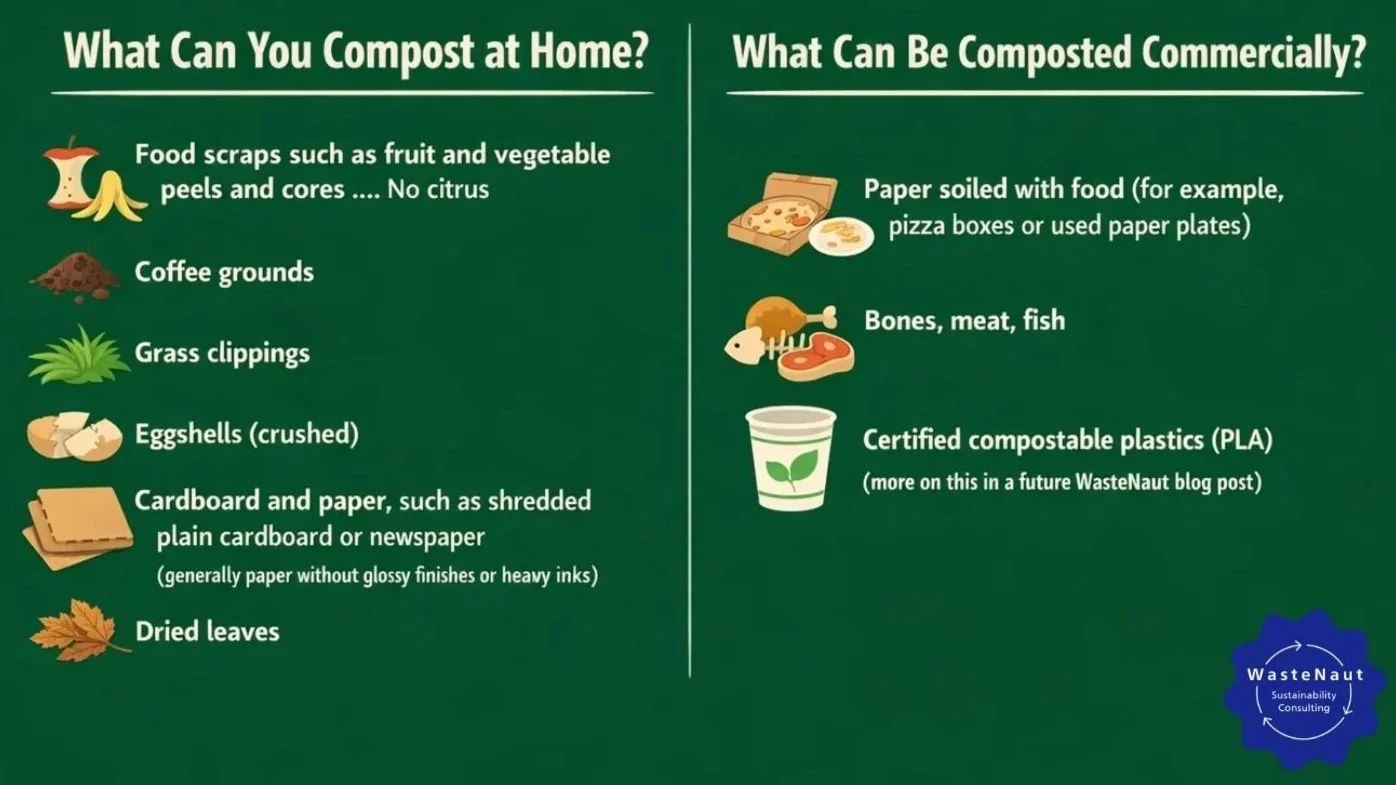
Above are some general examples of where common materials can be composted.
Knowing where materials belong is an important step toward making composting systems work successfully. WasteNaut helps organizations and event planners navigate the key decisions involved in implementing composting programs, from material selection to waste diversion strategies.
Wondering why composting matters? Our next blog post, Composting Basics – 5 Benefits of Composting, explores several benefits you may not have considered.
REFERENCES:
Composting. Biodegradable Products Institute (BPI). Accessed March 7, 2026. From https://bpiworld.org/composting
Home Compostable vs. Industrial Compostable: What’s the Difference? Good Start Packaging. Accessed March 7, 2026. From https://www.goodstartpackaging.com/home-compostable-vs-industrial-compostable-whats-the-difference