
New Season, New Wardrobe? Let’s Talk Textile Waste.
Heather Kerns, Contributor
Summer is here, and with it comes my annual urge to bring my wardrobe back to life after months of sweaters, darker colors, and practical winter layers. While not everyone greets warmer weather by reorganizing their closet or browsing for new clothes, most of us experience moments when a wardrobe refresh feels tied to a life transition: a wedding, a new job, the start of school, or simply a change in season.
This year, though, I’m approaching that impulse with a little more intention because textile waste has become a much bigger environmental issue than many of us realize.
As I started thinking about my own shopping habits, I was struck by the scale of the problem. According to the United Nations, the world generates approximately 92 million tonnes of textile waste every year. At the same time, clothing production doubled between 2000 and 2015, while the average garment is being worn less often. In fact, the UN reports a 32% decline in garment utilization over that same period. Put simply, we are producing more clothing than ever before and getting less use out of it.

Why Textile Waste Matters
When clothes are discarded, many end up in landfills where they can take decades to decompose. In 2018 alone, the U.S. sent 11.3 million tons of textiles to landfills, while only about 13% was recycled, according to the EPA.
The environmental impact goes beyond landfill space. Decomposing textiles can release greenhouse gases, including methane, which contributes to climate change. Some fabrics are treated with PFAS, aka “forever chemicals”, that can persist in the environment for years. And many modern garments are made with synthetic fibers that shed microplastics into soil, waterways, and the atmosphere.
Fast fashion intensifies the problem. The rapid production of inexpensive, trend-driven clothing encourages frequent purchasing and disposal, while also generating additional waste from packaging and shipping materials.
Charting a Course Toward Less Textile Waste
You do not need a perfectly minimalist closet to make a difference. The goal is to make more intentional choices about what comes into your wardrobe and how long it stays there.
Shop sustainable brands — carefully
If you’re buying something new, take time to research the company behind it. Many brands market themselves as sustainable, but not all sustainability claims are meaningful. Look for transparency around materials, manufacturing practices, and labor standards.
Shop secondhand
Thrift stores, consignment shops, online marketplaces, and clothing swaps help extend the life of garments that already exist. You’re also more likely to find unique pieces instead of the same fast-fashion trends everyone else is buying.
Shop your own closet
Before buying something new, revisit what you already own. Try new combinations, pull out pieces you haven’t worn in a while, or style items differently. Sometimes the refresh you’re looking for is already hanging in your closet.
Buy for longevity, not trends
A useful question is not just “Do I like this?” but “Will I still wear this in two years?” Durable, versatile pieces often generate less waste than repeatedly replacing trend-driven items.
Repair before replacing
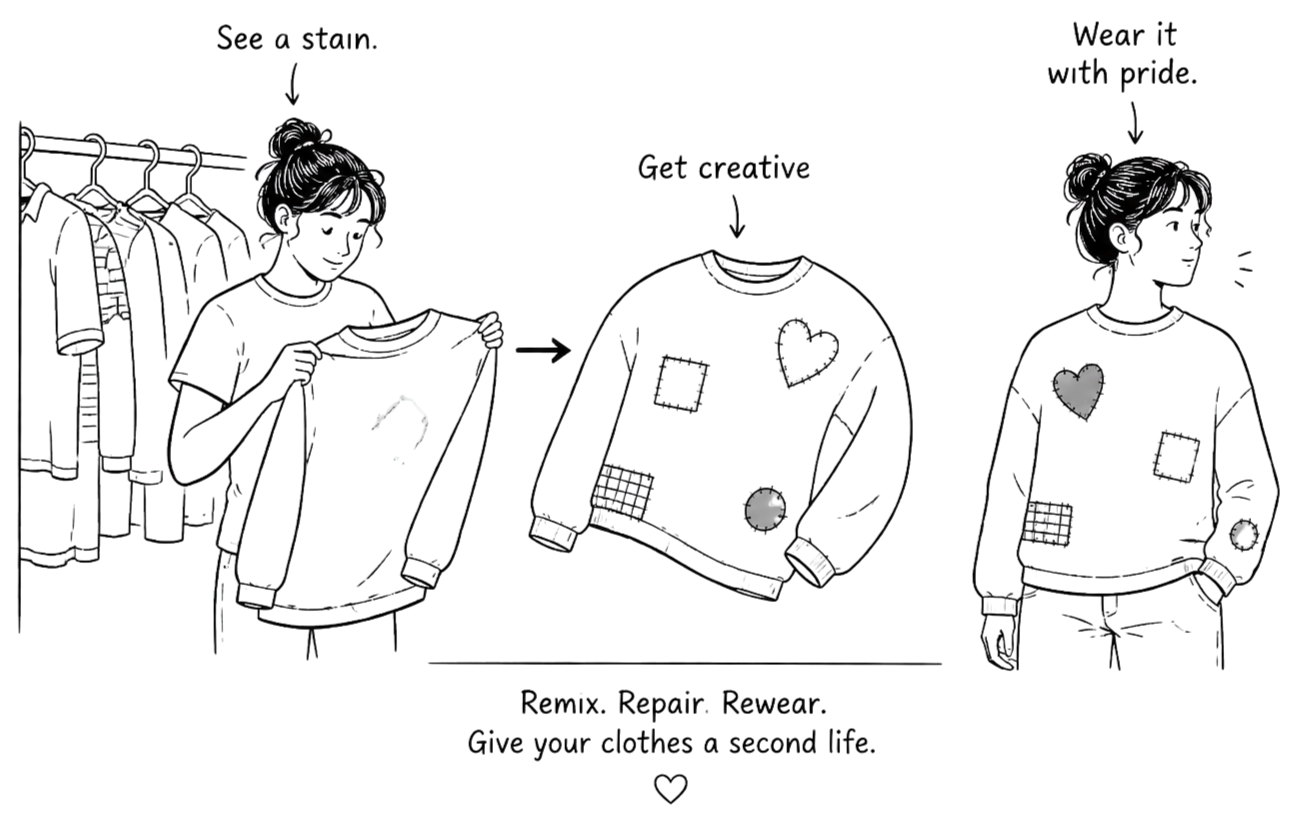
A missing button, loose seam, or broken zipper does not necessarily mean a garment has reached the end of its life. Small repairs can significantly extend how long clothing remains wearable.
Care for clothes properly
Washing in cold water, following care labels, and air drying when possible can help garments last longer while also reducing energy use.
Consider borrowing or renting for special events
Weddings, galas, and other one-time events often lead to purchases that are worn only once or twice. Borrowing from friends or renting formalwear can reduce unnecessary consumption.
The Bottom Line
The most sustainable clothing purchase is often the one you do not make. But that is not always realistic. Seasons change, life changes, and sometimes a wardrobe update is necessary.
The good news is that reducing textile waste does not require perfection. Shopping thoughtfully, extending the life of the clothes you already own, and choosing quality over quantity can all make a meaningful difference over time.
As consumers, we have more influence than we may realize. The choices we make about what we buy, wear, repair, and discard shape demand across the industry and can help reduce the growing problem of textile waste.
In our next WasteNaut blog post, we'll take a closer look at another environmental challenge associated with modern clothing: microplastics. We'll explore where they come from, why they matter, and what can be done to limit their impact.
References & Further Reading
United Nations Environment Programme (UNEP). Sustainability and Circularity in the Fashion and Textiles Industry.
https://www.unep.org/news-and-stories/press-release/unsustainable-fashion-and-textiles-focus-international-day-zero
U.S. Environmental Protection Agency (EPA). Textiles: Material-Specific Data.
https://www.epa.gov/facts-and-figures-about-materials-waste-and-recycling/textiles-material-specific-data
U.S. Government Accountability Office (GAO). Fast Fashion Is Great for Your Wallet, but Costly for the Planet.
https://www.gao.gov/blog/fast-fashion-great-your-wallet-costly-planet
Tide Ocean. The Plastic Problem in Fast Fashion: Unpacking an Overlooked Crisis.
https://www.tideyocean.org/blog/the-plastic-problem-in-fast-fashion-unpacking-an-overlooked-crisis