
PLA VS. PET: Compostable vs. Recyclable Plastics
Heather Kerns, Contributor
It’s the end of lunch. You’re standing in front of three different bins: landfill, recycling, and compost. You’re holding a plastic cup with green logo details. It says “compostable”. But is it really? It feels like plastic and looks like plastic. Don’t we recycle molded plastics?
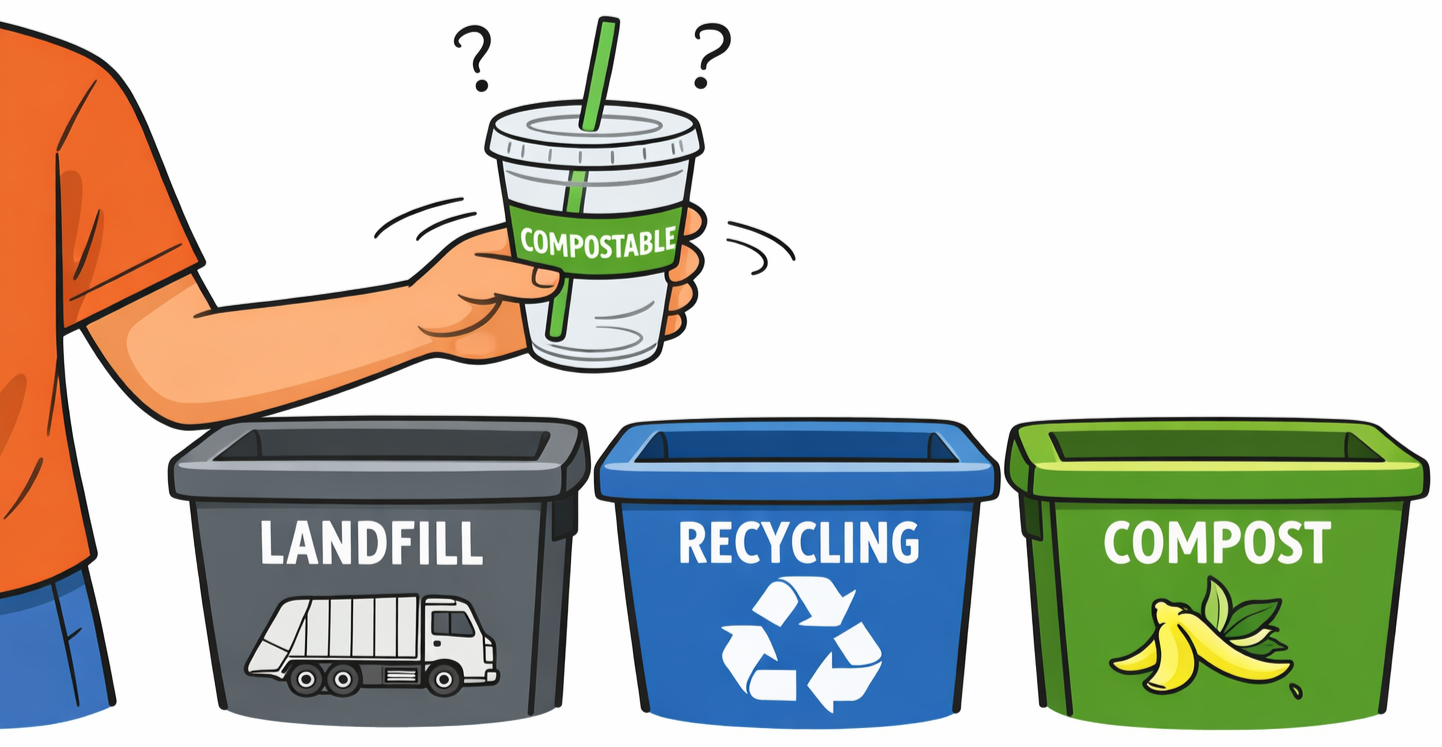
Which bin does it belong in?
This is a debate many people, even the most enthusiastic environmentalists working to live a low-landfill lifestyle, find themselves in. Compostable claims are becoming more common, especially in the food and beverage serviceware category. Cups, lids, cutlery, and containers are increasingly marketed as sustainable alternatives to traditional plastics.
What is that cup actually made of?
Let’s go back to the familiar decision of which bin to put your BPI-certified compostable cup into.
That cup is likely made of polylactic acid (PLA), a material many in the food service and packaging industries are turning to as a greener alternative. PLA is made from renewable materials like corn, sugarcane, and cassava starch. This material is positioned as an alternative to petroleum-based plastics. PLA is biodegradable and can be compostable, but only under very specific conditions of microbial activity. These conditions are typically found in commercial composting facilities, not in a backyard compost system.
Where does it break down?
Here’s where the issue arises: there simply are not that many commercial composting facilities equipped to receive PLA. Some composting facilities only accept food scraps. So while we may have identified a viable alternative packaging material, we now face another challenge of ensuring there is appropriate infrastructure to manage it at the end of its life. The capacity for composting PLA products is something that will need to be monitored as these materials become more widely available.
Why can’t we just recycle it?
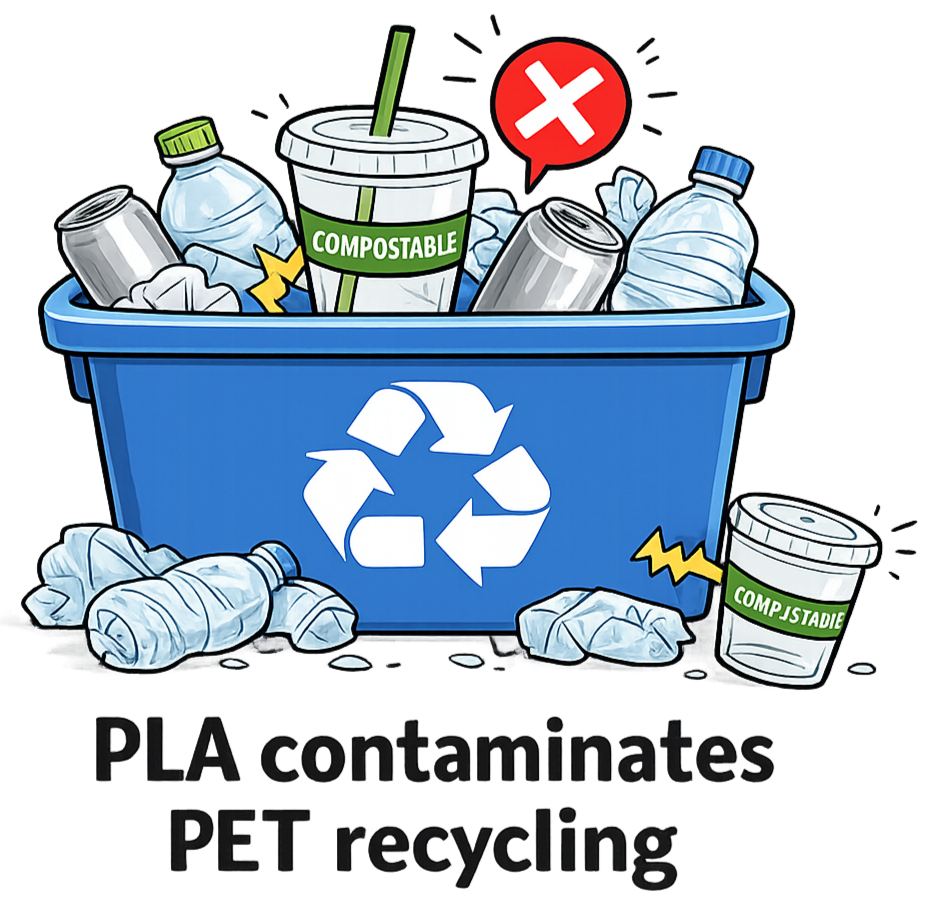
Once again, we’re back to the cup and the decision between bins. The cup has already been purchased and used, so it’s heading toward its end of life. We can hope that by placing it in the compost bin, it will be collected and transported to an appropriate composting facility where it can reach its intended end of life.
But the question remains: should we just recycle it instead? The answer is no.
PLA is very different from polyethylene terephthalate (PET) which makes up most of the plastic sent through municipal recycling systems. Recyclable plastics are gathered into large bales and then ground down to be reprocessed. PLA and PET do not mix well, so significant amounts of PLA contamination in recycling streams can pose a real problem.
What should you do with the cup?
While it may look like other clear plastic cups, PLA is fundamentally different from PET and should not be placed in recycling.
Understanding the difference between these materials is an important first step toward making better waste decisions. With the right guidance, that cup can reach the appropriate end-of-life facility. At WasteNaut, we can help ensure materials are directed toward the systems designed to handle them.
REFERENCES:
Route, E. 2006. Corn Plastic to the Rescue. Smithsonian Magazine. Accessed February 26, 2026. From https://www.smithsonianmag.com/science-nature/corn-plastic-to-the-rescue-126404720/
The Ultimate Guide to PLA Plastic Tableware. 2024. RestaurantWare. Accessed February 26, 2026. From https://www.restaurantware.com/blogs/eco-friendly-solutions/the-ultimate-guide-to-pla-plastic-tableware?srsltid=AfmBOooSg4jUgg3QZ3NM5jvKqWxB7wqsbS0EwWulYS1CkCQE1M7J1SFM
What are PLA cups made of?. Bio Leader. Accessed February 26, 2026. From https://www.bioleaderpack.com/what-are-pla-cups-made-of-the-science-behind-compostable-clear-cups/